
Fanfiction
Write fanfiction chapter by chapter, not in one click
Tell the studio what the story is about. It breaks the story into chapters with goals, cast and word counts — and from there you write one chapter at a time, edit by hand and decide what stays.
Features
What a fanfic is built from
Four formats for different intent — from a long multi-chapter story to a screenplay that is almost pure dialogue.
An outline instead of one long text
The layout suggests chapters: a title, a goal, the cast and a word count. The outline is an ordinary list — rename, reorder, add empty chapters and extend it when the story goes further.
The work header goes into the prompt
Fandom, rating, up to three genres and two tones. This is not decoration for a catalog card: the same lines ride into the prompt for the outline and for every chapter, so the prose keeps the mood you chose.
Characters and the chapter cast
A character is written once — name, role, description. Each chapter marks who takes part in it, and only those characters go into the prompt. The cast is visible right in the outline.
Chapter versions and the log
Every generation arrives as a variant: accept it, reject it or go back to an earlier version. The work log shows what was generated and what it cost.
Voice-over by paragraph
A chapter can be read aloud in a chosen voice. In the reader the text plays in order and moves on to the next chapter by itself, and clips left behind by later edits are marked as stale.
Publishing and export
The work joins the catalog with a cover, an author, its length and its cast. Readers get the published version, and the text is always yours to take — as an EPUB archive or in Markdown.
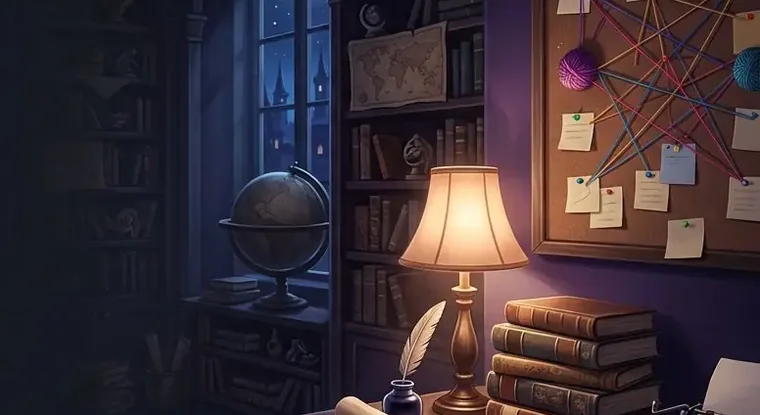
The outline
The outline is a draft of the plot, not a table of contents
Every chapter has its own goal, its own cast and its own word count. As long as the goal is stated, the chapter is written about that goal and not about something vaguely next. Empty chapters can be created up front and filled in later: the layout extends the outline by exactly as many chapters as you ask for, and its price depends on that number.
Open the studioHow it goes
How a fanfic gets written here
Five steps, each one standing on what the previous already produced.
1. Say what the story is about
One required field: what happens, why the characters cannot simply walk away, and what makes it worth reading. Both the outline and every chapter grow out of it. Next to it — fandom, rating, genre and tone.
2. Break it into chapters
The studio suggests chapters with goals, cast and word counts. From there it is your list: rename, reorder, delete what is extra, add a chapter of your own.
3. Write one chapter at a time
Write on continues from the last paragraph, Rewrite builds the chapter again. The result arrives as a variant — accept or reject it without touching the rest of the text.
4. Add voice-over if you want it
Pick a voice and the chapter splits into paragraphs with playback. Voice-over is optional and is done chapter by chapter, not for the whole work at once.
5. Publish
You need one written chapter and a pen name. The work joins the catalog, readers get a table of contents, and your later edits reach them only when you press Update publication.

Reading
A finished work is read and listened to
The reader shows a table of contents, the length of every chapter and a mark where sound exists. Playback starts from the work itself and moves chapter after chapter on its own. Readers see the published version, so a rewritten paragraph never appears in the middle of their reading — your edits travel when you update the publication.
Made in the studio
Fanfiction written in this studio
Outline, chapters, cover and voice-over — all of it here. They open in the reader with a table of contents.

FAQ
Fanfiction questions
The short version.
How is this different from asking a model to write a fanfic?
Which formats are there?
Can I edit the text by hand?
How is the price counted?
Whose text is it, and what about other people fandoms?
How does voice-over work?
What do readers see after publishing?
Write fanfiction online — your idea, the model writes the draft
A fanfic in Limko Studio is built the way people build one by hand: first the premise — what happens and why the characters cannot simply walk away; then an outline of chapters with goals and word counts; then the text, one chapter at a time. A finished chapter does not replace the previous ones: the work grows instead of being rewritten from scratch every time.
The work header — fandom, rating, up to three genres and two tones — is not a decoration on the catalog card: the same lines go into the prompt for the outline and for every chapter. So do the characters marked in the chapter cast and your own instruction, if you need one: no landscape descriptions, more dialogue than reflection.
The word fanfiction usually means where to read. There is something to read here too — the public catalog of the studio — but it holds only the works their authors published themselves: Limko Studio is not a library of other people stories.
In short
- Four formats: multi-chapter, one-shot, novella and screenplay
- An outline with a goal, a cast and a word count per chapter
- Fandom, rating, genre and tone right inside the chapter prompt
- Chapter versions: accept, reject, bring back the previous one
- Voice-over by paragraph and continuous playback in the reader
- Catalog, author page, EPUB and Markdown export
See also: гайд: как написать фанфик с готовой заготовкой, как устроена Limko Studio, создать комикс, создать мангу, озвучка работ студии, озвучка текста голосом.
Ready to create?
Sign in with Google or Yandex, welcome credits land on your balance — no subscription.